Motivation
Reviewer MjTC: "How does the model behave in multi-room scenes when frustums overlap through walls?"
Results
Frustum overlap ignores occlusion (Appendix A.4). Measured: retrieved frames are less occluded than random frames that pass the same test.
Table 1: Occluded share of in-frustum content, retrieved vs random frames (monocular depth).
| depth tolerance | retrieved, occluded share | random, occluded share |
|---|---|---|
| τ = 0.25 | 24% | 38% |
| τ = 0.15 | 37% | 53% |
| τ = 0.10 | 49% | 65% |
- 399 chunks sampled as in training; occluded share is the part of in-frustum content that is hidden in the candidate.
- For 79–94% of chunks with a frustum hit, at least one retrieved frame has visible overlap ≥ 0.3.
- Limits: depth is monocular (Depth Anything 3), not ground truth; τ is our choice. Indirect evidence only. [VERIFY wording]
Examples
First 8 sampled chunks, no selection. Top row: query frame, retrieved frame, query overlay. Bottom row: random control. Green = same surface visible in the candidate, red = occluded by another depth.
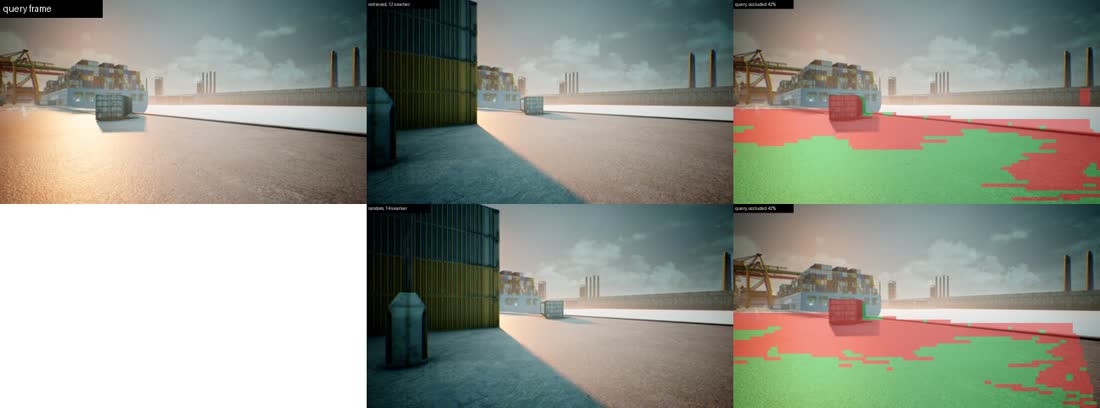
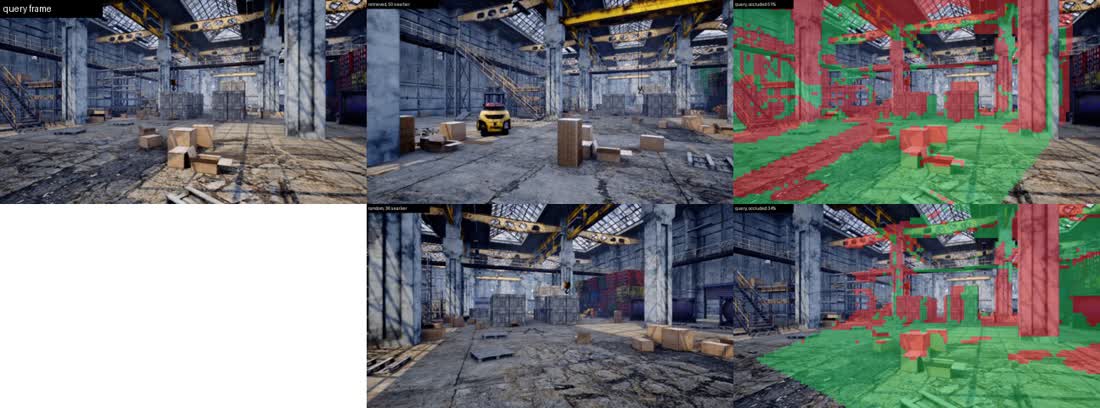
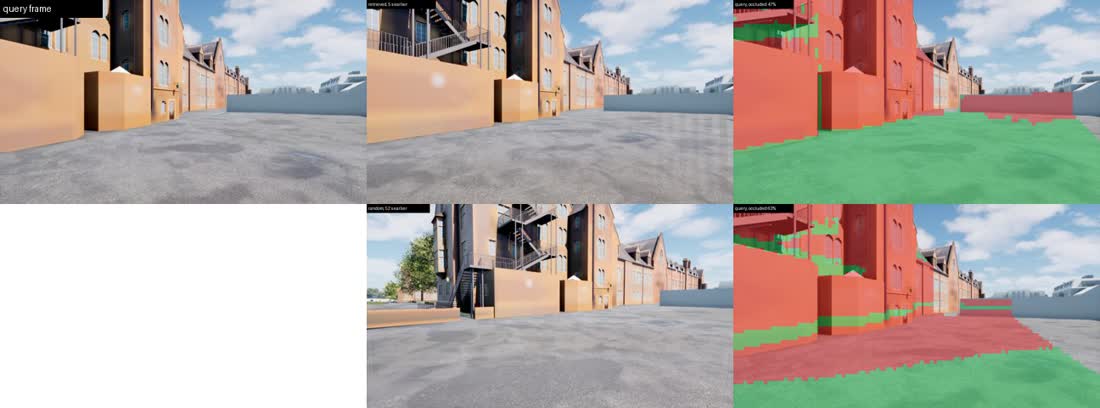
Show the other 5
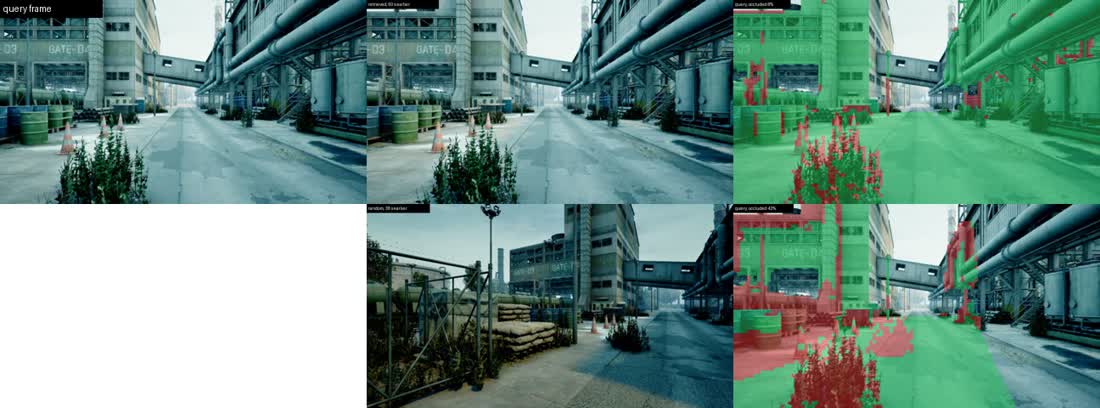
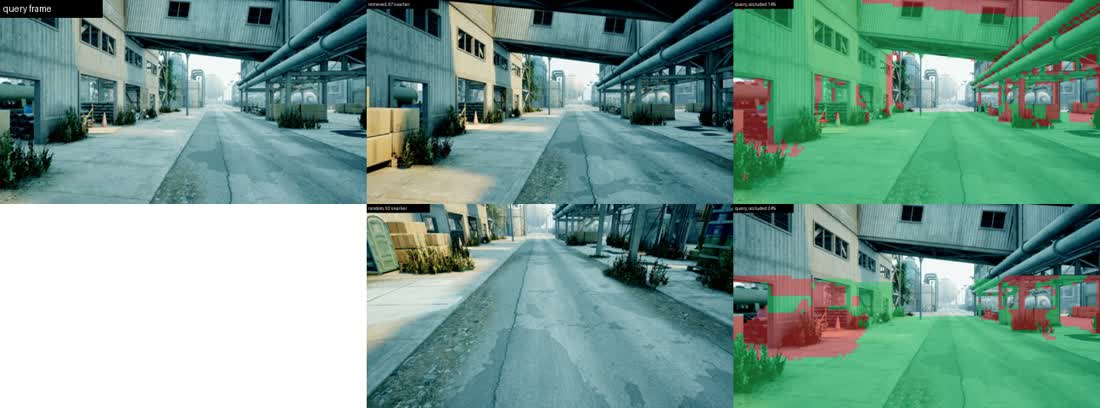
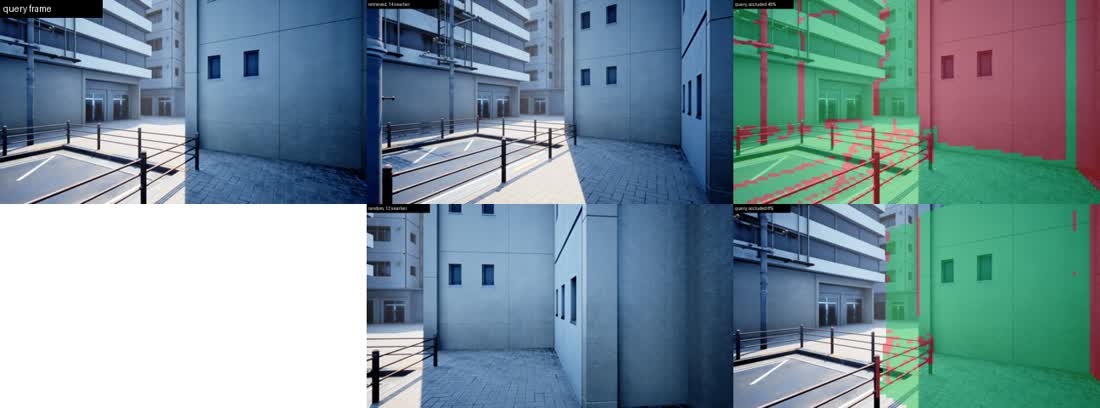
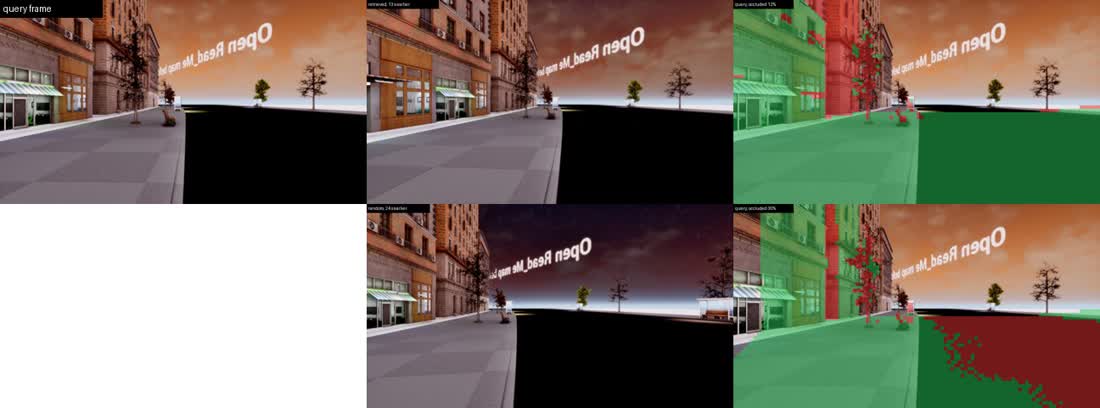
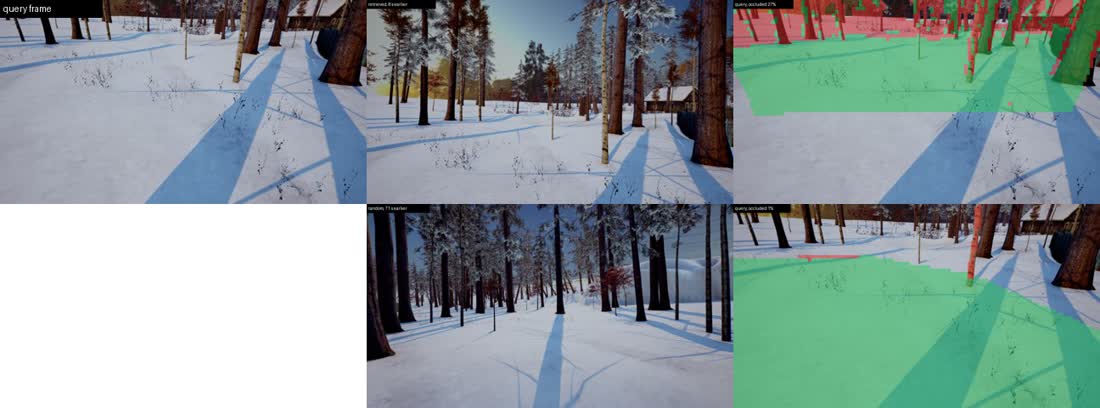
Over these 8 chunks the two are equal (30.5% vs 30.4%; retrieved is lower in 4 of 8). The gap in the table comes from all 399 chunks, not from these examples.
Conclusion
- Retrieved frames are less occluded than random frames that pass the same frustum test: 24–49% vs 38–65% of in-frustum content, depending on tolerance.
- Most chunks have a usable retrieved frame: 79–94% of chunks with a frustum hit have one with visible overlap ≥ 0.3.
- Indirect evidence only: depth is monocular, and τ is our choice.